|
|
|
GAS DETECTION - CARBON MONOXIDE
(CO) |
|
 |
|
|
|
|
Carbon monoxide is one of the most
common toxic gases. It is a colorless and odorless gas.
The exposure limit is 35ppm, but at lower concentrations,
symptoms of fatigue may occur.
At higher concentrations, breathing becomes forced. Other symptoms
of poisoning are headache, nausea, confusion and dizziness.
The poisoning often leads to unconsciousness and possibly death.
If exposed to the gas for a long time, serious symptoms can occur
even at concentrations as low as a few hundred ppm.
Repeated poisonings may cause lasting harmful effects.
What happens in connection with poisoning is that carbon monoxide is
absorbed by the hemoglobin in the blood, which means that oxygen
transport is disrupted.
In case of poisoning breathing should take place using an oxygen
apparatus.
Alarm levels for monitoring of the ambient air are preferably set
according to the occupational exposure limits:
-
Alarm 1 = 35ppm
-
Alarm 2 = 40ppm
If the source consists of exhaust fumes
the following levels should be set:
-
Alarm 1 = 20ppm
-
Alarm 2 = 25ppm
Carbon monoxide will form in all processes
where there is incomplete combustion of carbon fuels.
CO detectors are needed in the metal and mining industry where
combustion engines are used.
Another area is the chemical industry.
Detector Placement
Carbon monoxide has a slightly lower density than air. Yet, being so
close to the density of the air, it is easily influenced by drafts.
In many cases when a certain gas has a density lower than that of
air (light gas) it will rise to the ceiling and one should therefore
place the detector there, but when the density of a gas is very
close to that of the air, one must take into account the fact that
it may end up anywhere in the room.
In these cases, the detector should be placed at breathing height,
1.5 - 1.8 m above floor.
If carbon monoxide, with a density lower than that of the air, is
compressed and suddenly released into the atmosphere, the rapid
pressure change will cause a temperature drop which in turn has the
effect that the density of the carbon monoxide increases.
This may cause the carbon monoxide to sink to the floor.
Explosion hazard
Carbon monoxide is also an explosive gas, but its lower explosion
limit, ie, the minimum concentration at which explosion may occur,
is relatively high, 10.9%, which because of poisoning is a lethal
concentration.
See also Projecting Guide
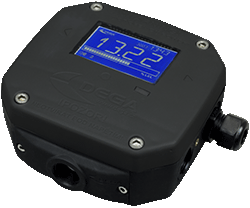
Choice of Equipment, for instance COW MDR
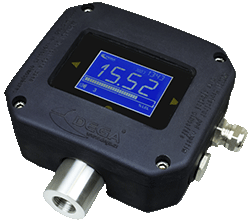
The Stand-alone detector is a detector
where power supply, alarm and control functions are integrated in
the detector housing.
This detector is used where very simple
systems are sought and only few monitoring points are desired.
 |
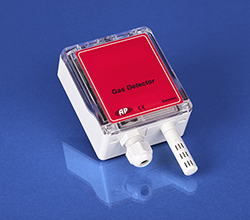
COW Analog Modbus, Relay Output - Wall |
|
|
|
COW |
CE |
|
COW/COD |
|
|
|
 |
|
|
|
|
P-release |
declaration |
|
Datasheet |
|
|
|
|
|
|
|

COD, Analog Modbus - Duct |
|
|
|
COD |
Coverage |
Prod. |
COW/COD |
|
|
|
|
|
|
|
|
P. Release |
Park.garage |
Guide |
Datasheet |
|
|
|
|
|
|
|
|
|
|
|
|
|
|
|
|
|
|
|
|
|
|
|
|
|
|
|
|
|
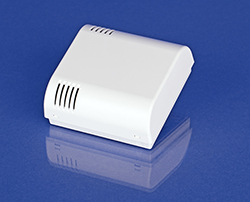
COR,
Analog, Modbus - room |
|
Environm. |
P.-release |
|
Ex. Calibr. |
|
|
|
|
|
|
|
|
declaration |
Modbus |
|
Certificate |
|
|
|
|
|
|
|
|
|
|
|
CE |
|
|
|
|
|
|
|
|
|
|
|
declaration |
|
|
|
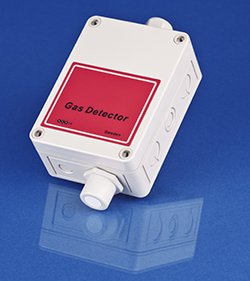
PCO - Analog 4-20mA |
|
|
|
|
|
IP |
|
|
|
|
|
|
|
|
|
|
|
Protection |
|
|
|
|
|
|
|
|
|
|
|
|
|
|
|
|
|
|
|
|
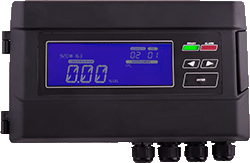
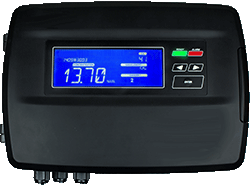
The multipoint system equipped with an
instrument for gas monitoring is based on detectors providing a
gas leak unit with a signal related to the gas concentration.
The signal is then processed in the gas leak unit where
measurements, alarms and control functions are obtained.
The most common gas leak unit is of this type with several measuring points
is the gas alarm.
More here
Preferred system functions
Regardless of the type of gas leak unit you choose, we suggest a
study of the following features:
|
ALarm: |
Should the
facility have one or two alarm levels per detector? |
|
Control signals: |
Should the facility have
one relay per alarm level and sensor?
Should the relay have a function for time delay?
Should the facility have computer output? |
|
Measurem.
values: |
Should it be possible to
read alarm values?
Should it be a digital, an analog or a flashing sign for
gas alarm? |
|
Diagnostics: |
Should the facility itself
be able to identify sensor errors, open circuits and
instrument errors? |
|
Safety: |
Should the plant be
equipped with a battery backup? |
More >
Legal and safety requirements
The devices are manufactured according to the regulations and
various directives such as EN 50545, etc.
Products delivered by AP meet and even exceed
the new European Standard EN 50545.
The safety features check the connected
warning devices on functionality and open circuit day and night.
|
|
| |
|
 |
|
|
|
|
|
 |
|
|
|
|
|
|
|
|
Gas products in an explosive environment
A small amount of energy - a flame, spark, high surface temperature
or similar is required to ignite an explosive gas mixture.
Products installed in an area with a potential explosion hazard must
of course in themselves not be a potential explosion hazard.
For this reason, the products are manufactured in such a way that
this cannot occur.
The equipment must also be labeled and tested - ATEX classified - by
the approved testing authority.
The Ex-class information is available in "Swedish Standard"
The choice of which Ex-classification is required is determined
by factors such as type of gas, permissible maximum surface
temperature and potential explosive hazards in the area where the
products are to be installed.
The potential explosion hazard in the different areas is determined
by the zone classification according to "Swedish Standard".
|
ATEX 1
|
|
|
|
ATEX 2 |
|
|
|
|
ATEX |
|
|
|
|
|
|
|
|
|
|
|
Guidelines |
|
|
|
|
Alarm Units |
|
|
|
 |
|
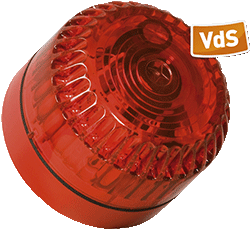
Flashlight for Carbon Monoxide Sensors |
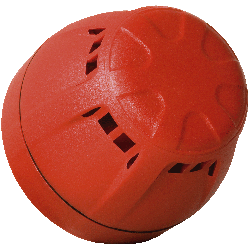
Warning Siren for Carbon Monoxide Sensors |
|
|
|
|
|
|
|
OAW |
|
|
|
|
|
|
|
|
|
|
|
Datasheet |
|
|
|
|
|
|
AAW |
|
|
|
|
|
|
|
|
|
|
|
Datasheet |
|
|
|
|
|
|
 |
 |
|
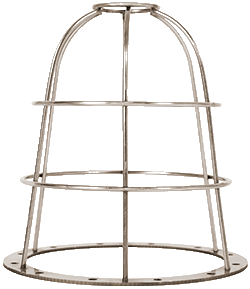
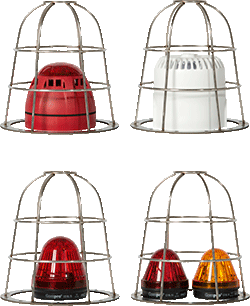
Impact Protection |
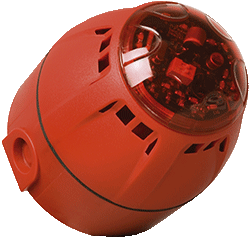
Combined Warning Siren and Flash Light for
Carbon Monoxide Sensors |
|
|
|
|
|
|
OAW |
|
|
|
|
|
|
|
|
|
|
|
Datasheet |
|
|
|
|
|
|
Impact Protection |
|
|
|
|
|
|
|