|
NEWS |
|
|
ARCHIVE |
|
|
|
|
2017-12-18
|
|
|
|
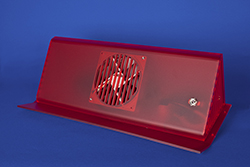
Do not allow bad air in the children's classrooms
The new ACU classroom purifier reduces the transmission
of contagious
diseases and helps those suffering from
allergies and asthma to stay
indoors without discomfort.
Bacteria and viruses have no wings but fly with the particles in the
room. The ACU radically reduces the number of particles in the room
and the really dangerous gases from mold
(mVOC).
|
 |
|
Using the ACU classroom cleaner, a large number of students and teachers who
previously suffered from indoor air pollution can now stay in their
classrooms without any problems.
The least dangerous particles are eliminated at an early stage of the
cleaning process and at the same time healthy air is being creating.
The ACU air purifier also very efficiently removes odors and pollutants.
Better air
contributes to increased concentration levels and better study results.
The finer the particles in the air, the deeper they
penetrate into the lungs and finally
they reach
the small balloon-like structures called alveoli.
The most dangerous particles are at nano size and come e.g. from modern diesel cars. These particles penetrate the
lungs and enter the blood.
The ACU eliminates 100% of the static electricity that often occurs between
students' clothes and chairs and benches.
Static electricity causes
particles in the air to be drawn to the students.
The
air currents of the silent built-in fan
have purifying effects
in all corners of the room.
The
ACU is a combination variant for quick and easy installation in
ceilings, on walls, in corners or on tables.
The classroom
purifier is maintenance free and produces no ozone.
It is easily connected with the supplied cord to a grounded wall outlet.
The ACU air purifier unit is available in three sizes for rooms of
84m2/200m3, 167m2/400m3
and 250m2/600m3
respectively. |
|
|
|
|
2017-10-25
Now you can see exactly how polluted the air is
in your room or in the city air.
With more information, you can make
better decisions - if for example an air cleaner should to be installed
or if increased ventilation is needed.
You can connect multiple detectors and display
the results of your property to a webpage or other display.
You can get a clear control over the air quality even locally. The measurement job is carried out by detectors inside your property or
outdoors. |
|
|
|
Air Quality Levels |
PM2.5 24h
Average concentration |
Effects on Health |
|
Color |
Level |
Air Type |
μg/m3 |
invisible |
|
Green |
I |
Very good |
0 - 35 |
Good air quality, almost no air pollution |
|
Yellow |
II |
Good |
36 - 75 |
Acceptable air quality, but some pollutants may
have a small effect on health on a handful of sensitive persons. |
|
Orange |
III |
Light
pollution |
76 - 115 |
Vulnerable people will experience some degree of
discomfort. |
|
Red |
IV |
Medium pollution |
116 - 150 |
Vulnerable people will suffer a high degree of
discomfort. It may also affect otherwise healthy people's hearts,
lungs and respiratory systems. |
|
Purple |
V |
Heavy
pollution |
151 - 250 |
Vulnerable people will
suffer even further from discomfort.
Many
people will suffer severe symptoms. |
|
Brown |
VI |
Serious
pollution |
> 251 |
Healthy people will
suffer severe symptoms. |
|
|
|
|
See
how contaminated the air is e.g. in schools.
The information is displayed locally in real time on the detector's
display in the classroom.
This detector provides accurate information about the quality of the air
students and teachers inhale every day.
This makes it easier for you to make decisions about what actions to
take
More > |
|
|
|
|
2017-03-06
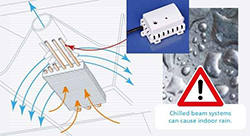
END OF WATER DROPS FROM CHILLED BEAMS
Everyone has probably experienced water drops from chilled beams.
Automatikprodukter, Sweden now launch a new
condensation detector with early condensation warnings to solve a known
moisture problem and prevent “indoor rain” from occurring.
Chilled ceilings are becoming more and more common in commercial
buildings. By ordinary climatic conditions the operating temperature of
the chilled ceiling may be close to the dew point with a potential
danger of giving rise to water drops.
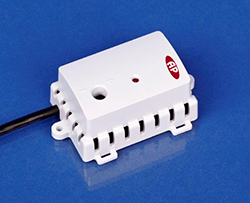
The new WCD condensation monitor WCD senses the
danger of dew a short time before this occurs and reduces or shuts off
the cooling water supply to the chilled ceiling.
The closer to the dew point the cooling water temperature can be, the
better for the energy efficiency. The chilled beams can be made smaller.
The new condensation monitor WCD senses the
danger of dew a short time before this occurs and reduces or shuts off
the cooling water supply to the chilled ceiling.
The closer to the dew point the cooling water temperature can be, the
better for the energy efficiency. The chilled beams can be made smaller.
New in the WCD condensation monitor is that it
includes a humidity sensor and there is also a temperature sensor in
order to calculate the dewpoint based on both variables RH and T.
When dew starts to build on this element the
electrical resistance increases rapidly. The detector also emits an
alarm at the onset of dew.
The condensation monitor has either a VFC (Volt
Free Contact) or a current output and is mounted in a small housing that
can be attached to the cooled surface to be measured.
The detector comes with a strap for easy mounting
on the coolest position of the chilled ceiling.
It may also be screwed on to the chilled
ceiling’s water supply unit.
The condensation monitor is a reasonable
monitoring solution that can be used to prevent condensation damages to
chilled ceilings from occurring.
More > |
 |
|
|
|
|
2017-02-06
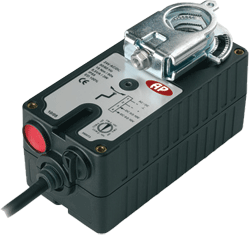
Damper Actuator for stables and poultry production
This is a damper actuator series suitable for rough environments with a
protection degree of IP66 in a durable housing.
The damper actuator allows farmers to make savings by avoiding exchanges
of standard units at regular intervals.
Nuisance
issues associated with air emissions in agriculture affect the
ventilation systems.
Sources of dust in buildings are cattlefood, down feathers,
microorganisms and crystalline urine.
Ammonia in poultry houses comes from waste.
Sprinkle
supplies, waste disposal, humidity, pH and temperature affect the
ammonia concentration and the level of emissions which together often
cause standard engines to break down.
The
product is fully protected against dust and against powerful water jets.
More > |
 |
|
|
|
|
|
|
2017-01-23
EARLY — BUT NOT A FALSE SMOKE ALARM
How can the number of false alarms caused by
dirty Duct Smoke Detectors be reduced without any reduction in
sensitivity?
This was an important starting-point when
developing this completely new type of the smoke detector system
described in this article. |
|
 |
|
|
|
As the smokes from the fire enters the ductwork
system it may be diluted by with clean air from other areas, therefore,
it is necessary for any detectors to be very sensitive.
Unfortunately, in the past, high sensitivity has
often led to false alarms and as a result confidence in these systems
has fallen.
The common reason for false alarms from duct
smoke detectors is dust contamination and high airflow rates.
To manage these problems we often been forced to
lower the sensitivity of the detectors either by:
Fitting a filter on the detectors to limit
the effect of dust and high air velocity. Without a filter the wind
velocity may be to high.
With a filter the sensitivity will be greatly
reduced and when the filter is clogged with dust the detector may
not function at all. Placing the detector outside the duct and
diverting the air/smoke mix through tubes to the detector and back
again.
What have we achieved here?
If you take only a sample to the detector it may not be reprensentative
of the main airflow but may solve the velocity problem.
This leaves the dirt problem, so if the detector
is not maintained a false alarm will still result.
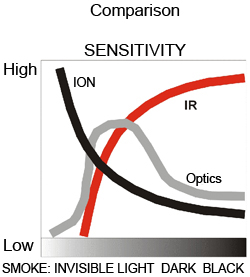
If you have difficulties detecting when the
detector is in the ventilation duct, with access to all passing smoke,
how difficult is it then to detect outside the duct where you only take
a small part of the smoke and lead it out for detecting:
|
 |
|
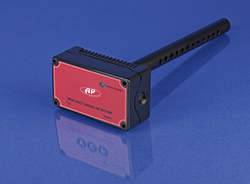
A Duct Smoke Detector called TDD (True Duct
Smoke Detector) is able at a very early stage in the rough
environment of a ventilation duct without giving false alarms.
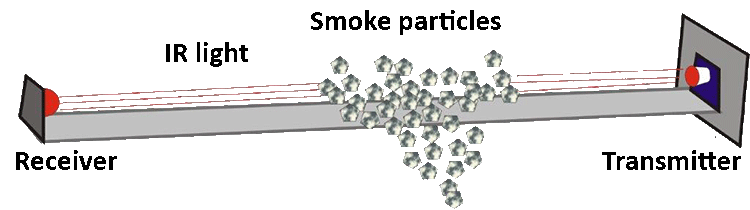
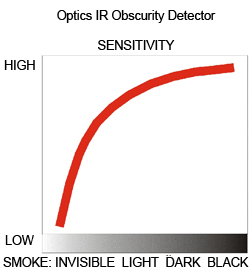
TDD is an optical obscuration designed to
function inside the ventilation duct.
The sensing part of the detector covers as much as possible of the duct.
A infrared beam is transmitting through the
sensing tube in the duct and if smoke present the beam is obscured to
some extent and an alarm signal is given.
The TDD-detector has an adjustable level of
sensitivity that goes from 3 to 25% (0,1 to 0,9 db) obscurity for all
different environments that can exist in a duct.
You may ask, how does the TDD cope with dust?
It surely must affect this detector as well.
Dust is always present in the return air duct as
is air velocity.
The air will inevitably bring dust and this will
stick to the detector optical parts, however, the detector electronics
constantly monitor the obscuration within the sensing tube.
The air brings along dust and particles that of
course also catches of the TDD-detector.
Despite it manage to be dirty without making a
false alarm and without loosing its sensitivity and as the level changes
slowly over a long period of time (Weeks or Months).
The signal is adjusted to compensate for this
build up of dust, however, should the obscuration change quite rapidly
(Seconds) this is signalled as smoke and will cause an alarm after an
initial delay to compensate for drops of water or dust that disturbed
from duct wall etc.
|
 |
|
Self compensating
Eventually even the TDD will become dirty, how long time this takes
is a function of the environment in which the detector is used.
The internal calibration of the detector is
provided at an outgoing terminal in order that the level may be seen if
connected, for example , to a BMS system.
This signal is 2 to10 volt with 3 volt being
clean 10 volt dirty or in alarm and 7 volt being service indication.
Modern smoke detectors are often difficult to
clean, some needing special knowledge due to the radioactive nature of
the devices used with consequential costs involved in special
instrumentation required to recalibrate them after cleaning.
Normal maintenance staff without previous
training can clean TDD.
If they clean a pair of glasses they can clean
the TDD it is the same technique.
This provides a better economic solution for the
low life cost (LCC) for the end users.
Adjustment of TDD to different supervision system
TDD is constructed to be connected to all in the market existing
Fire Alarm- and BMS- system, both digital and analogue.
As standard there is two alarm output with an
open switch for smoke alarm and one analogue 2-10Volt for an output
service alarm.
The output service alarm can for example be
connected to system that are computerized and where you can see the
dirtiness 0-100% on a BMS or Webb.
The option variant of the detector has 2 output
relays for smoke alarm.
One example for how to use the two alarm output
can be that alarm output 2 is used for control of fire dampers and
valves and gives a local alarm signal while output 1 is used for
external alarm signals, suitably for fire defence.
Reset the alarm signal
The detector can be reset by pressing the reset button (front panel)
for one second or by interrupting the supply voltage (Remote reset).
The detector can also be reset automatically when
the around obscurity ended.
> More |
|
|
|
|
|
|
2017-01-16 Ozone free air purification with
the new SPG ionization needle
Many applications require odor control. Odors can
indeed be difficult to trace.
Odors can be hard to track down and many times,
exhaustive (and expensive) IAQ investigations raise more questions than
they provide answers.
Many applications require odor control. SPG
patented needlepoint technology has been used in:
-
Airports
-
Hospitals
-
Casinos
-
Locker rooms
-
Restaurants
-
Dining halls
-
Morgues
-
Nail saloons
-
Kennels
-
Veterinarian offices
-
Fish markets
-
Fire damage areas
-
Trash rooms
In general, SPG’ technology can effectively
control gases with electron volt potentials less than 12.
Every gas has an electron volt potential (Ev) associated with it.
SPG purposely controls the ionization output so nothing over an electron
volt potential of 12 will be oxidized; this is how SPG prevents ozone
from being created. Oxygen’s Ev number is a little over 12.
If you ionize oxygen, ozone is created, and that
is an undesirable byproduct.
Below are odors effectively controlled by SPG’ technology:
A recent study from an
installation at Methodist Hospital in Houston, Texas, shows how well the
SPG-IBAR system controlled the problem-atic diesel generator exhaust
odors during weekly testing.
When the backup generators are
tested, the exhaust odors were being drawn back into the building
causing a high volume of complaints..
After the installation of the SPG-IBAR system, the odor complaints
ceased.
Ps.
The SPG ionization needle does not need to be replaced which
eliminates annual costs, is ozone free and fits ionization units
from other manufacturers.
More > |
 |
|
 |
|
 |
|
|
|
|
 |
|
2015-11-18
OZONE
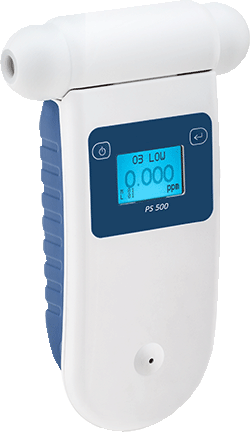
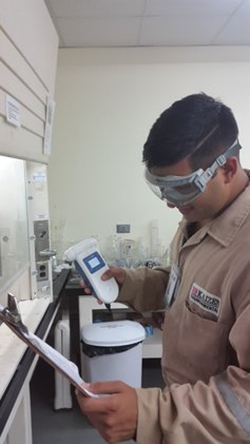
Automatikprodukter markets a new portable instrument
that measures the ambient levels of ozone concentrations with great
accuracy.
Thus, people who in the years to come will be
exposed to ozone can be protected against this deadly toxic gas which is
triggered by rising ozone levels.
The human olfactory sense is not sufficiently
sensitive to detect the metallic smell of ozone when the gas has reached
hazardous levels.
The sensitivity of the human olfactory dense varies and is influenced by
local conditions.
Ozone is used in many industrial processes and commercial buildings.
It has therefore become increasingly important to measure ambient ozone
around ozone generators, ozone equipment for rooms, air purifying units,
electrostatic filters, needle- and tube ionization units, garbage room units,
sets with UV radiation and other types of air conditioning systems that
induce ozone.
A unique sensor technology provides high accuracy and precision
measurements with detection limits down to 1 ppb.
This gas-sensitive sensor has a dynamic setpoint for reducing drift.
Easily serviced measuring instrument makes downtime shorter and one of
the unique characteristics of the portable ozone detector is the ability
to change the sensor heads between devices.
Sensors can be easily replaced without additional
configuration.
The choice of three portable ozone measuring instrument provides custom
usability depending on the application:
-
PS 500 is the complete package that includes built-in data logging
functionality, alarm setting levels and control options.
-
If ozone control is the most important requirement the PS 300 may be the
right option.
It is equipped with high and low alarms and user defined setpoints for
the monitoring and control of ozone concentrations.
-
PS 200 is the basic model.
It is mainly suited for health and safety samples and to test against
personal exposure.
More > |
 |
|
|
|
 |
|
|
|
|
|
|
 |
|
2015-10-20
Reduced maintenance costs for gas detectors
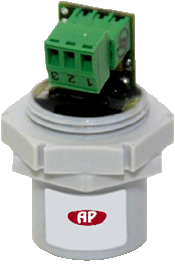
For air quality monitoring in car parks
and garages, Automatikprodukter introduces an innovative replaceable
sensor.
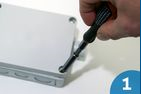
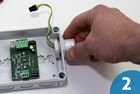
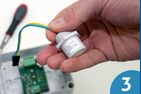
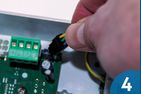
The sensor can be replaced without specialist competance.
Whether in
underground parkings areas, tunnels or loading zones – even the smallest gas
leakage must immediately be detected, located and reported.
The sensors specially optimized for the different
gas types, CO, NO2 and LPG work selectively in the defined hazard area.
The gas sensors in conjunction with sophisticated controllers and
obligatory warning devices primarily monitor the air quality required
for health and also reliably supervise the plant. |
|
|
Revolutionary replaceable sensors provide cost savings and
independence.
Gas detection systems must not only meet the latest technological
standards, (Level SIL2 EN50271), but also the latest legal requirements
EN50545.
From time to time, but at least every 2 years, these gas sensors have to be adjusted or
recalibrated in order to ensure proper monitoring.
The necessary
calibration of the sensors has been a very complicated procedure so far:
the underground garage operator was dependent on an external certified
specialist who had to come regularly for the on-site calibration
of the sensors, costing a lot of time and money.
|
|
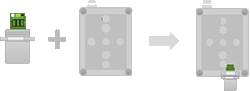
Thanks
to the replaceable sensor, recalibration becomes a home
game.
Automatikprodukter
sends the car park operator the newly calibrated sensor heads on
request, which can be replaced independently according to the principle
Plug & Play with little effort and in a short time.
This means
significant time and cost savings, because without the need to employ an external specialist
you can carry out the replacement much faster and cheaper.
This ensures a low life cycle cost (LCC).
LCC means the total investment and operating
costs during the product's life time.
More >
|
 |
 |
|
 |
 |
|
|
2015-09-24
Sick building syndrome: delivering the
complete picture with instant clarity
As the move to more tightly-structured indoor air
quality (IAQ) legislation continues, environmental consultants, safety
professionals and building managers all search for more accurate,
reliable and flexible systems to monitor potentially harmful indoor
environments.
First identified as ‘office illness’ back in the
1970s, as data emerged linking office workers in newly constructed
buildings and tenants in new homes with a range of non-specific
symptoms, sick building syndrome (SBS) as it became known was identified
in around 20% of newly constructed commercial buildings in Europe.
Research soon linked SBS and its impacts on
humans - such as headaches, eye irritation, respiratory discomfort,
dizziness, visual disorders and memory impairment - to a number of
specific indoor sources, many of which contain volatile organic
compounds (VOCs). These sources include carpets and furniture, cleaning
products, office equipment, human occupancy as well as microbial action
and pesticides.
These specific sources release VOCs into the
atmosphere, known as outgassing.
The effects of outgassing are often intensified
by poor heating and ventilation (HVAC) systems or the over-use of air
recirculation in both residential and commercial buildings, exacerbating
symptoms.
Now, with the emergence of potentially much more
stringent IAQ legislation, those with environmental, safety, hygiene and
building control responsibilities are beginning to recognise the
complexities of monitoring IAQ, particularly in larger buildings.
This is because there is now a growing
understanding that the impacts of SBS are not necessarily uniform across
a building, and may vary significantly over a single floor.
And this variation may well be caused by human
occupation, or other variables throughout the course of any given
period.
The monitoring complexities caused by lack of
uniformity in IAQ can be further exacerbated by the potential for
additional reading errors caused by humidity or contamination. These
errors can range between 15-20% and can, in combination with lack of
detailed zone-by-zone data, render the entire monitoring process void.
Automatikprodukter can deliver air quality
detectors to provide highly accurate and continuous data information
about indoor air in different zones.
QHT and BIO
The IAQ detector makes the picture complete by
offering continuous and highly accurate humidity, temperature and
barometric pressure information so that variables, such as human
proximity can by tracked, day and night.
The detectors provide continuous, highly accurate
IAQ monitoring and can be tracked throughout the building zone-by-zone,
floor-by-floor no matter how large the facility may be.
This means users, whether experienced
environmental consultants, safety and hygiene professionals or building
managers, will have a complete picture of ever-changing environmental
conditions with instant clarity. More >
Air Quality,
standard
 Demand controlled ventilation in class room
|

 |
|
|
2015-09-06
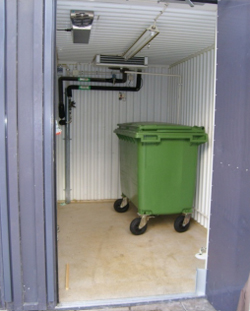
Bad smells from garbage rooms sometimes
spread to other areas of the property.
It may even be extremely unpleasant to walk into
the garbage rooms because of the bad smell.
AP's air purifier removes bacteria and mold
spores etc.
Frequent problems in garbage rooms are:
-
Infectious microorganisms
-
Strong odors
-
Mold and other harmful pollutants
-
Spread of odors to other areas
Air purifiers replace expensive refrigerated
garbage rooms.
More > |
 |
|
|
2015-02-26
Traffic lights warn students of poor indoor air
A standard wall mounted CO2
detector has been equipped
with LED indicators to alert students and teachers of excessive levels
of CO2
in their classroom.
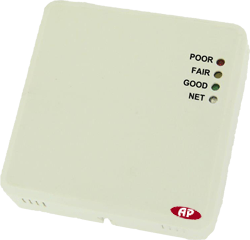
The new RC 24 CO2
detector from Automatikprodukter features LEDs of
different colors indicating different CO2
concentrations.
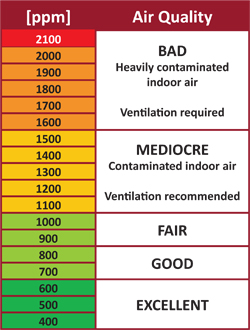
Red means bad air (1100-2000ppm), yellow means that the air is ok
(900-1000ppm) and green indicates fresh air
(450-800ppm).
Red light means that ventilation should be increased by for instance
opening windows.
It takes about two minutes to reduce the CO2
concentration from
1400ppm to 800ppm.
The RC24 detector indicates the CO2
concentration in an easily
understood way.
It is better to trust CO2
detectors than ventilation systems
which according to media often do not function properly.
The RC 24 CO2
detector continuously monitors the air; the LED’s
on the detector are visible for both students and teachers.
Poor air affects a student'' ability to concentrate.
It makes both students and teachers tired, which affects learning in a
negative way.
Teachers working in schools with fresh air have fewer sick days than
their colleagues in 'sick' schools.
The RC 24 CO2
detector also features a selectable analog output
4-20mA, 0-10Vdc or 0-5Vdc and Modbus communication that can be connected
to an automatic monitoring- and control system of the
CO2
concentration.
The detector is optionally available with a built-in monitoring device
for humidity and temperature - RCHT 24.
More > |
RCHT 24 |
|
|
|
 |
|
|
|
 |
|
|
2015-01-15
AIR HEALTH INDICATOR
New detector secures visual control of air
quality.
The last few years of international debates on
clean air has attracted much attention and created an increased focus on
good air in schools, etc.
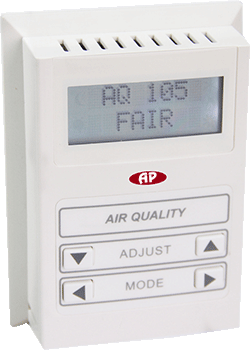
AP launches new affordable air quality detector
that can provide up to date information visually via a display and
prevent bad air.
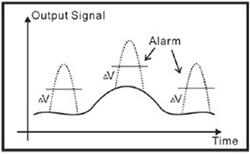
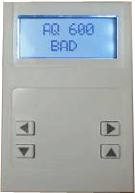
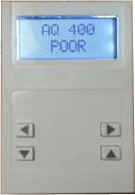
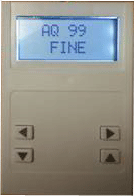
The display automatically shows for the people in the occupied zone four
different levels of current status:
Easily understood by everyone!
The QHT 24R detector also includes features for humidity and temperature
with selectable output signals 0-10Vdc,
0-5Vdc or 4-20mA.
Modbus RTU is built-in as standard.
The QHRT 24R is marketed at a time when there is an increased focus on
clean air. Safgety awareness regarding air has also become an issue of
great importance.
More > |
 |
| |
|
 |
 |
|
|
|
Display of AQ-value
/Adjust: AQ-nivå 1/2/3
Temp. unit C/F
Scrolling On/Off
Display of temp- level/ Move in menu |
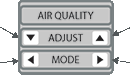 |
Display of
humidity
/Adjust: AQ-level 1/2/3
Tem. unit C/F
Scrolling On/Off
Add to menu/ Move in menu |
|
|
|
 |
 |
|
|
|
2014-11-26
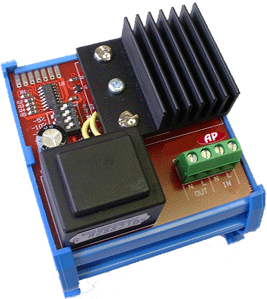
Automatikprodukter AB,Sweden introduces TUD
102, a DIN rail mounted 2kW thyristor unit developed to control
continuously electric batteries from BMS/PLC or other controller with
0-10Vdc output signal and raise/lower.
Accurate regulation increases thermal comfort. The TUD 102 adapts
quickly to temperature change for the air-heated ventilation or if it is
heated up by panel radiators.
The accurate stepless control increases thermal comfort and reduces
energy costs.
The TUD 102 uses solid state switching on/off by the pulse modulation
technique PWM.
The major advantage of the TUD 102 is high
precision, with stepless control 0-100% of the ratio between on/off time
depending of the actual heating demand.
The TUD 102 has no moving parts that can be destroyed.
Power supply is by means of semiconductors with zero crossing to reduce
RFI-problems.
The TUD 102 has over-temperature protection, which resets automatically.
AP´s power controllers deliver up to 400 kW at 220V-255Vac or 380-440Vac
for different control of electrical heater batteries or other
electrically resistive loads.
More >
|
|
|
|
2014-10-21
It has been established that welding plants,
swimming pools, laboratories, gymnasiums and many other unhealthy areas
need better ventilation to achieve a better indoor climate. AP
Environmental Detector BIO can be the solution for a better indoor
environment.
Most systems designers use CO2
sensors to indicate personal load as part of
demand-controlled ventilation.
A disadvantage of this method is that it ignores the harmful impurities
that may be present in the air even when
CO2
levels are low.
VOC sensors offer the best of both worlds.
They allow ventilation based on occupancy and
air pollution - and does not require any more work than installing a
CO2
sensor.
The
Environmental BIO detector measures both the VOC and the CO2,
and does this by measuring volatile organic compounds (VOCs) and leaves
the output signal corresponding to a CO2 level of 0-2000 ppm.
This means that systems designers can use VOC/CO2-based
detectors and simultaneously monitor both personal load and VOC.
One of the keys to the AP sensor´s reliability is that VOC
is an indicator of human load just as good as
CO2.
This is because a large proportion of volatile
organic compounds in indoor space is generated by human breath, sweat and
skin or from colognes and perfumes etc.
Extensive research has been conducted on human occupancy, VOC levels and
CO2levels
in 1,500 offices, schools and homes to establish the relationship
between these three factors.
The research identified a complex correlation algorithm between VOC and
CO2. This algorithm was used to create the output of the VOC sensor.
The accuracy of this output compared to
CO2levels is shown in the pdf file
Experience tests.
The graph shows that the VOC sensor tracks occupancy and that production
has a high correlation with
CO2level.
The detector indicates when the additional VOC or air pollution occurs
from cooking or other activities.
More >
|
 |
|
|
|
 |
|
|
|
|
|
|
|
 |
|
|
2014-08-21
Gas
Central for reduced air pollution
The Gas Central, VOC, from Automatikprodukter comes with an integrated
detector that senses the need to remove odors to improve the air quality
and optimize ventilation.
The integrated CO2 / VOC sensor (VOC
= Volatile Organic Compounds) measures the concentration of various
gases and odors such as tobacco smoke, body odors, frying, carbon
monoxide, methane, ethanol, acetone, methanol, etc. in the room.
This gas central intended for indoor use, offers a solution in a
variety of applications in for example restaurants, pubs, kitchens,
toilets, recreation areas, locker rooms, smoking rooms and controlled
ventilation in homes.
The gas
central can be supplemented with an additional external detector for
detection of other gases.
The gas central significantly adds to the comfort in office buildings
while at the same time reducing energy consumption.
The sensor is pre-calibrated and easy to install. As a result of this, commissioning can be made with the regular installation measures
including placement on the wall 1.6 m above the floor. There is no need
for additional calibration by a qualified technician.
By using the detector, energy costs like heating and running costs can
be reduced by better optimization of the ventilation system.
More >
Project Guide > |
|
|
Levels to set in the
ventilation system |
|
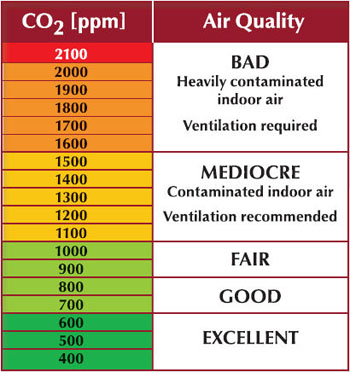
Measurement starts at
450 ppm. At 10 volt output signal it becomes approximately 11% at 4800
ppm and 22% at 0 to 2000 ppm. |
|
|
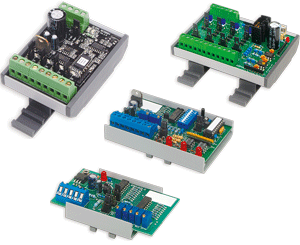
2014-01-14
New
digital input and output modules can perform a variety of control
functions for properties and industrial automation such as
from a
variety of control signals
The
products together with with their control solutions contribute to
improving the design of property monitoring systems at reduced cost.
More > |
|
|
|
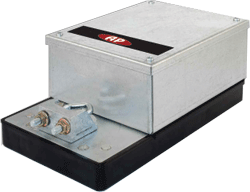
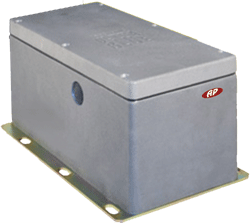
2013-11-29
Damper actuators approved for nuclear power plants
AP have qualified for safety related installations in nuclear
facilities in accordance with technical regulations for ventilation.
The damper actuators are manufactured using the latest
quality procedures for use in nuclear environments.
It has been a process of rigorous standards with detailed assessment and
description of the manufacturing processes and final testing of the
actuators.
-
Our
damper actuators now comply with the ISO 9000 quality and safety
system, associated manuals and ISO certification.
-
The CE
tests have been reviewed and we hold test protocols from Notify
Body.
-
The
acuators meet different electrical requirements such as The European
standard EN 607730-1 for controllers as well as other classes for
electrical functions.
The evaluation until approval of the damper actuators performed by quality inspectors in the nuclear industry has taken nearly a year to
complete.
We have now received our first delivery.
More > |
 |
|
 |
|
|
2013-11-27
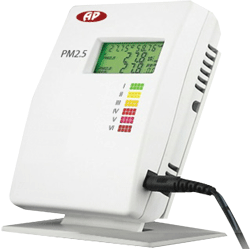
AP
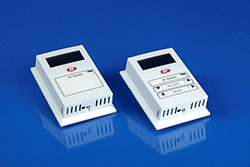
launches a new indoor monitor measuring PM 2.5 particles (less than 2.5
microns). The monitor instantly provides clear information on air
quality.
This means that everybody who is concerned about their indoor
environment can now have full control over the air quality.
People in schools, or in their homes, etc., can clearly see how clean
the air is in each room. The PM2.5 concentration is shown as averages
over an hour in six levels and gives clear indication about just how
clean the air is.
The information is clearly presented on the front of the monitor/detector
and one can easily determine if proper filtration comes from the
ventilation system or from another installed air purification
technology.
|
 |
|
An LCD display shows real-time measurement of
PM2.5, with moving averages, and actual measurement of temperature and
humidity.
The integrated sensor has an optical sensing method using infrared LEDs,
monororing in real-time indoorPM2.5 concentrations.
The technique has a compensation method with up to 10 calibration points
to ensure PM2.5 accuracy in different environments.
Public demands for clean air means that there is a strong preference for
an indoor monitor showing local air quality in the rooms as well as
being able to connect this information to a parent monitoring system.
Now this indoor monitor is available either as a table-top or for wall
mounting.
Having installed the indoor monitor, each one of us can take control of
the air quality produced by the ventilation system. This provides
an entirely different insight into what happens to the air in different
rooms at different activities in a way that has hitherto not been
possible.
The wall mounted option is equipped with Modbus connectivity.
The product comes with guide which is easy to understand. This guide
should be placed adjacent to the product.
The indoor monitor should create attention and impetus to improve the
air quality.
More > |
|
|
2013-11-27
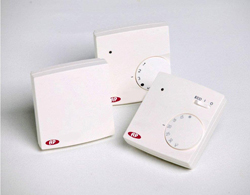
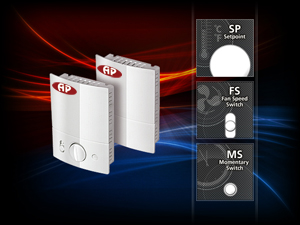
We introduce a series of temperature sensors - SAS, passive and
active, for wall mounting, providing reliable and accurate temperature
information to the control- and monitoring systems in properties.
The enclosure is white to match most indoor environments.
The sensors satisfy not only the requirements for temperature regulation
in properties, but also offer an attractive solution for interior
designers, architects, project managers and end-users with different
needs and requirements. |
 |
|
The room sensors have either a high quality thermistor or alternatively
nickel-/platina element with 0-5V , 0-10V or 4-20mA working in certain
temperature ranges that can be customized.
The combination of different output signals and measuring ranges in one
unit creates a variety of user options from the same sensor.
In addition, there is an option with a potentiometer with a local
setpoint of the room temperature, fan control with 3-5 speeds, an LCD
display showing the current temperature or a control button for
lighting.
More > |
|
|
2013-11-16
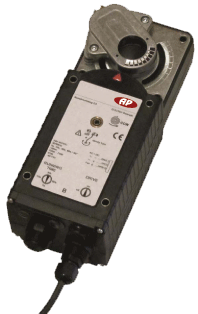
Wide range of
actuators from 2 Nm to 100,000 Nm - all in one place
We offer you the very best in your choice of
actuators.
Different protection classes from IP21 to IP68
-
Standard - On/Off - Failsafe
-
Fast - Powerful - Supersfast
-
Harsh environments - Industrial/Marine -
Stables
-
Modbus - Fume hoods - Offshore
-
Industrial - Explosion proof ATEX -
Nuclear Power Plants
-
Special versions and many other applications
See
Overview of AP
Actuators
|
 |
|
|
2013-11-05
Clean air in combination with healthy air from
the ventilation system
AirClean mounted in the air handling unit
gives a filtration system that consists of a combination of
electrostatic filtration cartridges (EFX) and needle ionization in the
diffusers.
See also:
|
 |
|
|
2013-11-05
Clean air in combination with healthy air from
the ventilation system
AirClean mounted in the air handling unit
gives a filtration system that consists of a combination of
electrostatic filtration cartridges (EFX) and needle ionization in the
diffusers.
See also:
|
|
|
|
2013-10-12
Discover the risk of "indoor rain" from
chilled ceilings / beams.
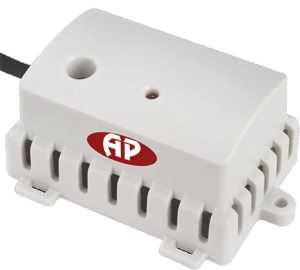
The WCD 2 is a new condensation monitor, which
monitors and detects the risk of condensation.
Early condensation warnings is one way of solving
this moisture problem and prevent possible presence of "indoor rain".
With a microprocessor based moisture and
temperature system the dew point is calculated in real time. |
 |
|
When the dew point is getting close the WCD 2
monitor rapidly emits a flashing light and the relay output switches to
turn off or reduce the cooling water supply to the chilled ceiling /
beam when:
the dew point is reached
if the piping is very cold
if the air is hot enough when the detector is
in operation
The energy efficiency will be better if the
cooling temperature is as near the dew point as possible.
The condensation monitor has either a dry contact
or current output and is mounted in a small enclosure that can be
mounted on the cooled surface that needs to be measured.
The detector condensation monitor
is supplied with a mountable strap.
can easily be fixed with the strap onto the
coldest place of the chilled ceiling.
can also be screwed onto the cold water
supply of the chilled ceiling.
The WCD 2 condensation monitor is an easy
solution for the prevention of condensation damages to chilled ceilings
/ beams.
More > |
|
|
2013-04-18
Daylight control provides significant energy
savings by switching lights on or off or by providing
analog control according to the amount of daylight required
for a certain activity adjacent to the light source.
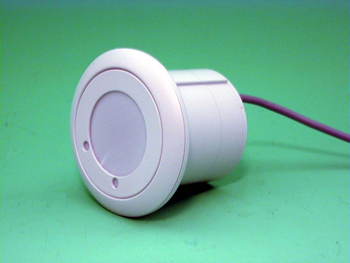
A light detector detects how much light there is
in the room and adjusts the light source accordingly.
The light level is lowered or raised
automatically or is on / off controlled.
Daylight control connected to fluorescent lights
gives automatic adjustment of light level.
The detector indicates when the light level
should be increased or decreased.
This technology is also available for outdoor
lighting and greenhouse applications.
Lighting control can generate energy savings of
up to 70%. |
 |
|
The detector is equipped with a switch for optional setting in different
lux ranges with output 0-10V/4-20mA for easy adaptation to the
controller / PLC or other control system.
AP light detector provides efficient indoor and
outdoor energy depending on the current light conditions.
AP light detector ensures that you get the light
you need . . .
but only when you need it.
Please see links below.
|
|
|
2013-04-12
Gas detection for parking houses
For the best gas detection in closed parking
houses, we recommend the following:
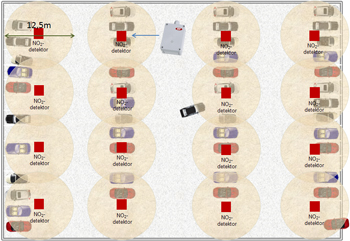
The NO2
010 detector for diesel cars should be placed 2 dm above the floor since
the gas settles like smoke above the floor. NO2
is a heavy slow-moving gas.
See pdf
about number of detectors and location.
Evacuation of exhaust air is achieved by means of
depression with the right balance of supply and exhaust air. |
 |
|
The detector is programmed 2 ppm for warning alarms and 5 ppm
for sharp alarms.
Extraction fans are used to evacuate the exhaust
fumes at high speed to disperse air instead of influencing the
surrounding area.
Inlets to the extractor fans are placed close
to the floor to collect the exhaust fumes.
At high gas levels the system alerts a
flashing light or warning siren while starting / speed regulating the
current extraction fan automatically so that the gas concentration is
reduced.
Nitrogen dioxide is a carcinogen and can not be
filtered out by your nose or throat but enters the lungs and then into
the bloodstream and eventually ends up in your heart.
To break down nitrogen dioxide in the ventilation
system, you can use EFX electrostatic filter supplemented by negative
ion generation.
Ps. AP is an advisor for proper use of gas
detectors in parking houses. |
|
|
See pdf:s below for further information about
different gas detectors |
|
Nitrogen Dioxide Detectors |
Carbon Monoxide Detectors |
|
NO2 |
MNO2 |
LNO2 |
NO2 |
|
|
|
|
|
|
Standard |
Medium cost |
Low Cost |
Energy savings (Swe) |
|
|
CO |
MCO |
LCO |
CO |
|
|
|
|
|
|
Standard |
Medium cost |
Low Cost |
Energy savings (Swe) |
|
|
|
2013-04-03
Gas Central
Automatikprodukter have developed the O2C
Gas Central for oxygen that gives warnings and provides control
functions at the same time.
With this central, a variety of causes that lead to oxygen depletion and
subsequent injuries or deaths can be prevented by an early warning
system for reduced oxygen consumption.
There are alarms and monitoring functions
integrated so that staff can be evacuated until the problem has been
looked into and corrected.
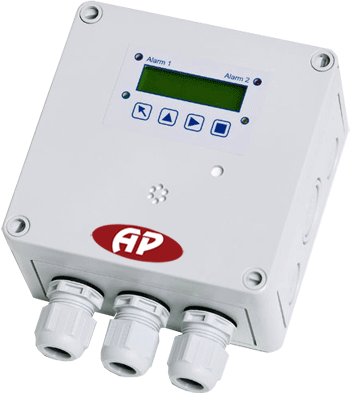
The Gas Central has a built-in oxygen sensor and
can receive analog signals from another gas detector and a number of
digital signals.
Via a software and by means of a menu structure,
input signals are treated in a specified way and then sent to a number
of analog and digital outputs.
These outputs are the system's functions for
measurement, alarm and control.
You can have one to four alarm levels per sensor.
Output signals can be fitted with a time delay.
Measured values
and alarm values can be read on a display.
The Gas Central has built-in diagnostics to
identify sensor errors, open circuits and instrument errors.
The O2C
Gas Central detects lack of oxygen in a reliable manner.
The Central is easy to install and use and
requires only very simple maintenance. It provides excellent protection
for both employees and for various construction units.
Learn more about oxygen technology
|
 |
|
|
2013-04-03
Reusable and washable filters mean that you do not need to change
filters in the future. The media in the filter have antimicrobial
embedded elements.
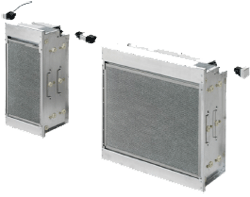
The EFX air filter is made of high quality materials and designed to
outlive the life expectancy of the air handling unit.
Dust, dirt and impurities are trapped in the filter and cleaned prior to
entering the air stream.
The EFX air filter is also manufactured with an antimicrobial feature
that helps eliminate organic pollutants like dust mites, mold and other
harmful bacteria.
The electrostatic EFX filter will give you many years of excellent
service and good living climate. It greatly reduces the load on our
sanitation works and does not deplete the earth's resources.
Just image how many millions of properties today that
need to change their filters a couple of times a year
and then dispose of them. The figure is alarming.
Handmade Quality .... Electrostatic premium
air filters
-
Filtration efficiency up to 99.995%
-
Creates low internal pressure drops in the
unit (= energy)
-
Dust capacity - can hold up to 600 grams
Electrostatic filters
-
maintain the cleanest possible indoor air in
your property
-
Reduce your heating and cooling costs
-
Improve your energy efficiency in the
ventilation system - low SFP values
-
Remove harmful dust, pollen, dust mites, mold
and spores
-
involves less cleaning
-
are antimicrobial
-
mean that you save money – and only have to
buy once
-
are environmentally friendly and washable
Advantages of the CleanAir EFX
-
The air filter is permanent and never needs
replacing
-
Removes all impurities with 99.995%
efficiency
-
Collects dust and particles into a collection
trap
-
You will never have to buy a new filter again
-
You only need to wash the filter
-
Sizes adapted to international standards
More about EFX high technology air filter
|
|
|
|
|
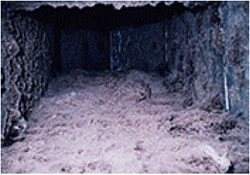
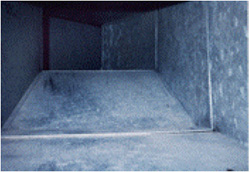
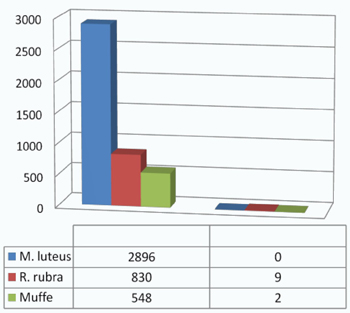
Mould before filtration |
|
|
|
Mould after filtration |
|
|
|
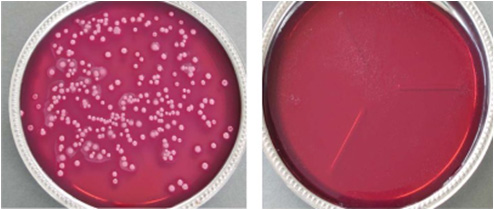
Colonies of bacteria before and after filtration |
|
|
|
|
2013-03-06
Ammonia detector that meets the requirements
of the Swedish Work Environment Authority
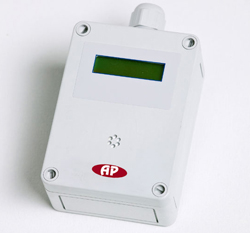
The intelligent gas detector NH3
100 provides accurate ammonia detection and protection, offering
reliable monitoring for a variety of applications.
Because of its many uses, ammonia (NH3)
is one of the most widely produced inorganic chemicals worldwide.
It is used in the petroleum industry to neutralize acids, in the crude
oil to protect the equipment from corrosion and by means of gas
treatment as a means of NHx
control.
|
|
|
Ammonia is also used as a coolant in industrial cooling systems in food
processing plants and as a fertilizer to produce ammonia- and nitrate
salts.
Ammonia is an active part in many applications. However it is corrosive
and dangerous, and the exposure of high concentrations can lead to lung
damage and death.
Exposure to gaseous ammonia is limited by the Swedish Work Environment
Authority for 15 minutes at 50 ppm and 8 hours at 25 ppm.
The NH3 gas detector monitors
ammonia in the range 0-100 ppm.
It has a built-in electrochemical precision element with low zero drift
over its operating environment and has one of the fastest response times
in the market, with a T90 response time of less than 35 seconds.
-
The detector measures NH3
with an accuracy of ± 4 ppm.
-
The NH3
detector is easy to install and can be calibrated manually or by
using the Service Tool.
-
NH3
100 protects people and equipment where ammonia leak is a potential
danger.
More about NH3 |
|
|
2012-12-04
Helsingborg Hospital has the cleanest air in
operating theatres.
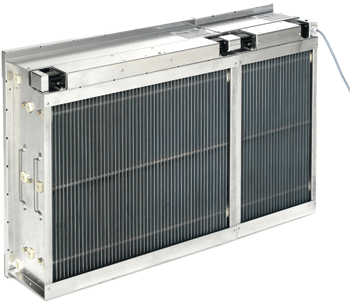
The Hospital equipped operating theatres
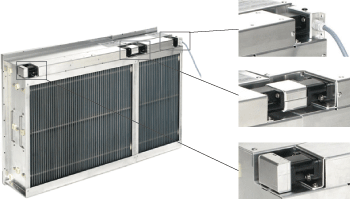
with the AP's air purification system - Air Clean - which has an
integrated electrostatic filter, EFX.
The intention was to increase safety and security
for patients as far as possible, and eliminate all possible routes of
contamination, together with other preventive measures.
Electrostatic filters create low cfu/m3-values,
i.e. low levels of airborne bacteria-carrying particles in the operating
theatre.
The ventilation provides a comfortable working
environment for the staff in the operating theatres.
The work is carried out in well filtered air with
an efficiency of 99.7%.
Additionally, EFX electrostatic filters save 30%
energy of the fan motor´s electric consumption thanks to the low
pressure drop across the filter. SFP (measure of ventilation system
efficiency) is affected positively by reducing the designed pressure
drop down to about 35 Pa.
More
> |
|
|
|
|
 |
|
|
2012-12-04
Gas Detector for Hydrogen leakage
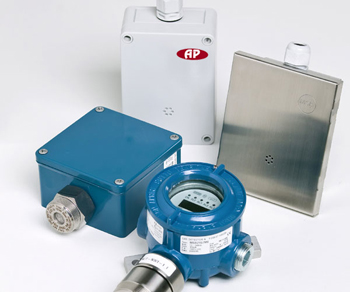
Reliable monitoring of hydrogen leakage is
available for a variety of industrial and commercial plant environments.
The detector detects the exact amount of hydrogen in different LEL
levels. The H2
Gas Detector continuously monitors the combustible hydrogen gas in the
atmosphere below the lower limit for explosiion.
It has an integrated precision sensor with a response time of t50<3
seconds and t90<10 seconds/methane. The detection
limit is 0.5% LEL |
 |
|
The detector has a sophisticated design with many application options,
including analog signals, relay outputs or Modbus communication as well
as an LCD display as an option that displays gas concentration in LEL.
The single point Controller CH2
also displays error codes for troubleshooting and provides a complete
monitoring via its display.
Process engineers look upon hydrogen leakage as a
danger. Since their task is keep people out of danger, and protect
equipment and the environment, they consider the H2
hydrogen sensor well suited for a wide range of industries where
hydrogen leakage is likely to occur.
The Hydrogen Gas Detector is also available in
explosion-proof design that meets ATEX, CSA and UL requirements.
More >
|
|
|
2012-10-09
Explosion-proof damper- and valve actuators
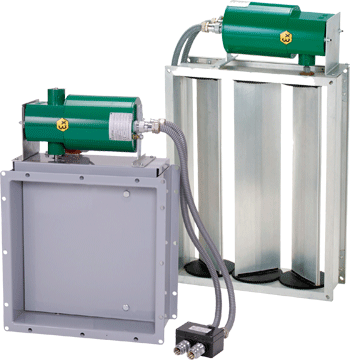
Here you will find ATEX actuators for dampers,
fire dampers and valves in building automation, chemical,
pharmaceutical, industrial and offshore installations in hazardous areas
zones 1, 2, and 21,22. A comprehensive program that meets the
requirements for explosion safety.
Explosion
proof approval with IP66 (68) protection class and universal technical
performance and an integrated heater option for reliable operation in
extreme ambient temperatures.
The actuators are available with signal contacts, fast, superfast and
adaptable to different types of ball valves and globe valves.
Highest ATEX approval for all types of gas, mist, vapor or dust provides
good security in each application.
The
actuators are 100% overload protected, and self-locking. Brushless
motors should guarantee long life operation.
This is a selection of AP's products for explosion protection, which has
been tested by international testing institutes and control bodies.
Natutrally, everything is tested according to the ATEX directive.
Contact
Ewert - specialist in explosion-proof equipment.
Read more
about
Explosionproof ATEX
|
 |
|
|
2012-04-22
Heat exchangers will because of deposits and
fouling lose efficiency and need to be cleaned.
The EFX electrostatic filter protects
plate- and rotary heat exchangers from fouling while maintaining a high
efficiency of the exchanger.
Cleaning the heat exchanger is a fundamental
problem in ventilation units.
The EFX is an innovative solution for the
elimination of the problem at its source.
The filter is an effective trap to catch the
smallest particles.
Electrostatic filtration uses little energy,
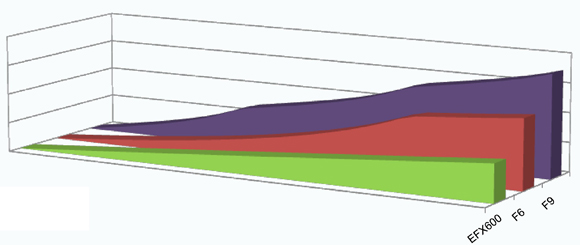
saves up to 30% of the fan motor energy costs by having a constant low
pressure drop irrespective of fouling.
The EFX-filter has a constant electrical charge
and does not deteriorate with time. Life expectancy is estimated at 20
years with a payback period of about 4-5 years.
Learn more about solutions to ventilation
problems at:
|
|
|
 |
|
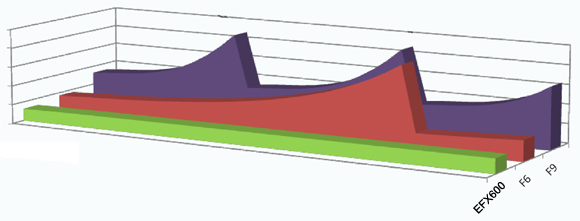
Air pressure drop
When F9 no. 1 is saturated it has to be replaced.
When F9 no. 2 is saturated this has to be replaced too.
|
|
 |
|
Energy Savings |
|
|
2012-03-28
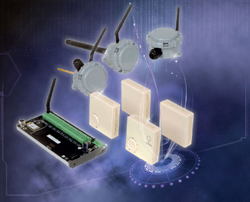
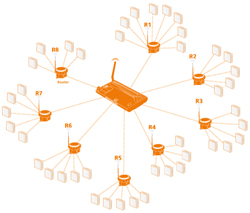
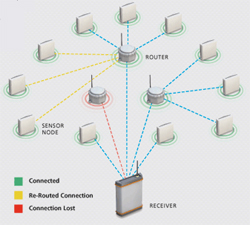
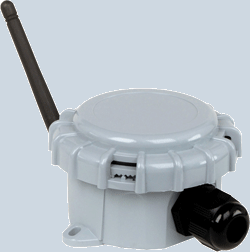
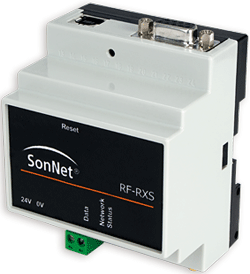
Pioneering wireless sensor technology SonNet
from Automatikprodukter has made it possible to save 15% of the
electrical installation costs for building automation contracts.
Electrical installation costs are often as high as 30-40% of the
building automation contract.
SonNet is based on a completely new installation philosophy of
building automation with radio-based sensors for new and existing
building automation controls.
Electrical installation costs have been the most expensive part of all
projects in building automation.
With wireless sensors offers an effective concept that reduces expensive
labor costs, while making a better long term solution for
property owners.
It is only recently that wireless sensors have become economically
viable for widespread use in applications for building automation.
Previously, wireless sensors have only been installed in places such as
museums, churches and other historic buildings where exposed wiring is
not allowed.
With the same or lower installation costs, wireless systems can replace
wired systems in a variety of different buildings.
Since wireless sensors can be easily repositioned, their use can be very
advantageous when system changes are made.
A property owner may, for example determine that an accurate temperature
measurement is necessary in areas with certain critical areas, which
means that additional sensors need to be installed.
If the ceiling is already in place and the wall surfaces are finished,
the installation of wired sensors may prove costly and cause significant
chaos.
This problem does not occur with wireless devices.
Sensors may also need to be moved when all the equipment is finally
installed in a new building.
Rearrangement of furniture often occurs and it is not uncommon that
sensors end up very close to copying machines, vending machines, which
certainly does not contribute to accurate control.
Wireless sensors overcome these limitations since they can easily be
repositioned.
The same advantages occur when new or additional equipment is to be
installed since wireless sensors will substantially reduce both the
number of business disruptions and costs.
More at:
|
|
|
|
|
|
|
|
|
 |
|
|
2012-03-12
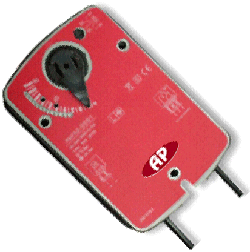
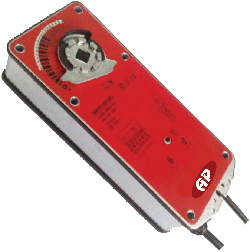
New damper actuators on / off spring return
model RAR from AP.
Typical of these new actuators is rated torque at
5, 10 or 15 Nm, round or square shaft and quiet operation.
RAR5 is small but powerful, which with its torque
of 5 Nm is a useful addition to the range of the smallest damper
actuators.
The new RAR type offers affordable solutions for
serving small dampers or valves in other applications.
The spring has sufficient and reliable energy
storage to move the damper to its safety position within 20 seconds.
As with all AP actuators, they are easy to
install and has auxiliary contacts for position indication.
The encapsulation meets the requirements of IP54.
The compact design makes RAR the smallest damper
actuator with a spring return.
The low power consumption of the actuator and the
parking function in the end position makes it both economically and
environmentally friendly, which in turn makes it possible to use in
small transformers.
Read more >
Also included in the actuator programme:
|
 |
|
 |
|
|
-
Powerful
-
Waterproof
-
Explosionproof
|
|
|
|
2012-02-28
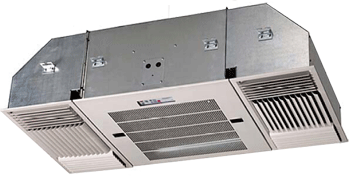
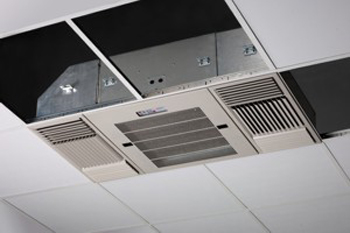
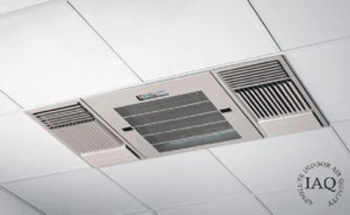
Clean Air company AP have developed a new
technology for indoor air hygiene. A device installed in a suspended
ceiling system called UC, removes impurities and odours with increased
efficiency while providing a significant improvement of wellbeing.
As a consequence, 60% of the population staying
indoors can now breathe clean air, even if the outside air is
polluted. This has previously been difficult to achieve
in the indoor environment.
Indoor air is recirculated and purified in
modules, available in versions for air flows up to 1450m3/h
The system stops the transmission of contagious diseases (colds,
flu, etc.) and kills the microorganisms present in the air such as
bacteria and mold.
An oxygen generator is available as an option
to control CO2 levels and
other gases.
This device is suitable to use in order to reduce
the CO2
level in meeting- and conference rooms, where the normal ventilation is
insufficient.
There has been a strong demand from our customers
for a combined room based air purification system that effectively and
quickly filters out micro particles, dust, smoke, etc. down to 0.1 micro
and significantly reduces odour while controlling the CO2
level in the rooms.
90% of the impurities can be reduced within
the first 10 minutes. The bacterial levels are reduced by up to
88%.
The optimum air hygiene technology has been
developed in combination with scientific measurements of air quality
before and after UC installations.
The UC technique is based on a an electrostatic
filter in combination with generation of negative ions. By restoring the
natural balance between positive and negative ions real oases are
created in rooms resulting in increased concentration and
productivity
among employees.
The UC is a modular technology for easy and quick
installation in suspended ceilings 600x600mm and is available with up to
24 installation options.
The UC has a negligible noise level and has a
very low power consumption.
It is run by remote control, which has a built-in
control box giving operational status.
In short, UC is the perfect choice for
optimum air hygiene in rooms.
|
 |
|
 |
|
 |
|
|
|
2012-02-13
NAI Air Purification Filter
AP is launching an air purification filter called NAI, which keeps air
ducts constantly clean.
It is mounted after the electrostatic EFX filter.
The combination provides purification up to 99% and eliminates particles
down to 0.1 microns.
This type of cleanup and near sterilization has been developed after
several studies, which demonstrated that bacteria / mold in conventional
ventilation ducts are often the cause of certain diseases.
Inadequate cleaning allows the spread of mold in the ventilation ducts,
which are ideal sites for growth of colonies of bacteria and viruses.
Heavily soiled ducts should be cleaned first and the technique is
preventative.
The new purification principle “negative ion generation" neutralizes the
air during continuous operation for an unlimited period.
The negative ion generation cleans the inner walls and makes them almost
become sterile.
Furthermore, certain odors and gases are minimized in this phase.
A favourable climate is created in the occupational zone when the
polluted air is gone and the air has been purified by means of negative
ions.
Negative ions remove pollen, dust and mold.
For the property owner this means that periodic chemical or mechanical
cleaning operation costs previously done with the help of a robot can
now be reduced.
The EFX / NAI method saves money for the customer.
More about Negative Ion Generation |
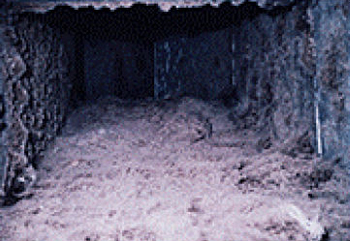
Before negative ion generation |
|
|
|
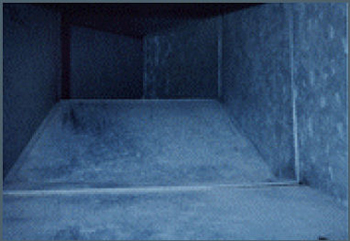
Before negative ion generation |
|
|
2012-01-27
Detector that alerts for ozone toxicity
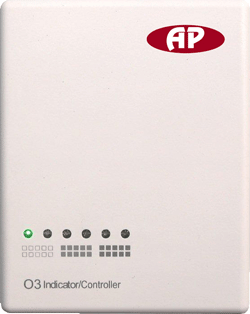
A new series of detectors from AP measure ambient
ozone levels in industrial kitchens, water and sewage plants, homes and
industries in a variety of security related applications.
Ozone is now used in many industrial processes
and commercial buildings. It has become increasingly important to
measure ozone content around different types of devices that produce
ozone indoors such as air purification devices, bipolar ionization
plants, devices with UV radiation, etc.
The ozone detector is designed to protect and
alert against ozone exposure. It meets the Work Environment
Authority's requirements for level limit 0.1 ppm (exposure limit
period), and 0.3 ppm max limit (exposure limit over a period of 15
minutes). It detects leaks and provides automatic control of processes
and equipment.
|
 |
|
In the U.S. the hygienic exposure limit is 0.05
ppm (50ppb), an alarm level we strongly recommend.
O3-detectors
from AP are designed for early detection of ozone, measurement and
control of the air, including process ozone (high concentrations),
ambient ozone (low concentrations) and fluid gas ozone (low
concentrations).
The detector is pre-calibrated and easy to install.
The start-up process is done according to standard installation
practices, including position on the wall 0.3 m above the floor.
Additional calibration by a qualified technician
is not needed.
Ozone is a toxic gas and more and more Europeans
will die of diseases induced by rising levels of ozone in the coming
years.
Approximately 1400 people die annually in Sweden
of ozone.
The human olfactory organs cannot detect the
metallic smell of ozone. Furthermore the sense of smell varies from
person to person and is also affected by local environmental conditions.
More:
|
|
|
2011-12-20
Water damage is often unexpected. Early
detection is vital to limit the extent of the damage.
The damaged area can be divided into two groups:
-
Unforeseen water damage
-
Intentional water damage
The most common causes of water damage are a
technical errors, improper construction, poor maintenance and
supervision, lack of waterproofing, carelessness, accidents and water
damage caused by workmen.
Reasons for intentional water damage, are for example, deliberately
turned on water taps where the drain is blocked and vandalism causing
broken water pipes.
Projecting guides
The importance of early detection is of
vital importance to limit the damage.
Read more in the links below:
|
 |
|
 |
|
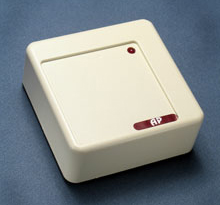 |
|
|
2011-12-04
AP launches an electrostatic filter cartridge called EFX, which is
environmentally friendly, energy saving and providing clean air at the
same time.
Property owners do not have to now change filters several times per year
and can avoid complaints about ventilation, since the air has
been washed clean. The cost has been reduced for operation and
maintenance while at the same time you save energy.
The EFX has been designed to be used in schools, hospitals, apartment
buildings and industrial processes, etc. and for companies working with
energy-saving measures, EPC, Energy Performance Contracting, etc., where
you want to create good indoor air quality. |
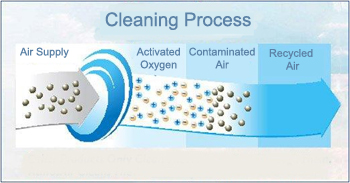 |
|
|
|
|
Electricity consumption for the operation of fans in ventilation
systems in different buildings is an essential part of the
overall electricity consumption in these buildings.
A great part of the electricity needed for the operation of fans -
sometimes up to 30% - is caused by the pressure drop in the
filters of the air supply units.
The EFX is a filter with a low pressure drop and does not change
significantly during the operating time and thus requires less work
for the fan motor.
The filter is reused and only needs washing.
You avoids the problem of service staff working in unhealthy
environments when changing the pocket filters.
EFX is designed to last for 20 years, with
nothing more than maintenance and cleaning.
As a consequence of this Life Cycle Cost is low. |
|
|
|
|
|
The electrostatic filter is based on a technology
with efficient particle capture and acts as an air purifier
for rooms. A capture system holds the particles in position.
The filter has been developed in collaboration with the Institute for
Hygiene and hospitals.
Hospital staff have conducted product tests.
Common air purification, energy savings and no changes of filters
are much appreciated improvements.
“I have dreamed of this kind of filter for
years. So far, you have had to stand in the dust with a protective mask
to replace the pocket filter. This has obviously been a poor and
unhealthy working environment. With this filter, you save working hours,
and in fact I think all pollutants have now disappeared in the occupied
zones.
Not having to discard a number of pocket filters,
as refuse, I believe this is also the way towards a more sustainable
society “ says Harry Kraaijenhagen from Airionic in Mölndal (Gothenburg
suburb). |
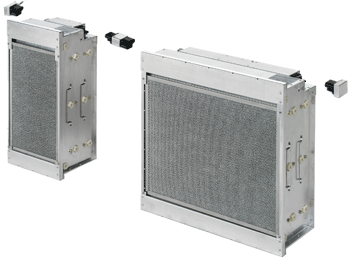 |
|
EFX is available in a number of air modules assembled from smaller to
larger systems in relation to airflow in the ventilation system. It fits
in both existing and new air supply units and can replace the old filter
without significant adjustment costs.
One conclusion is that it pays to install
electrostatic filters. This has been found out life cycle cost
calculations.
The electricity consumption for fan operation required by the air
filter, becomes more than 30 % lower, if one chooses to install
EFX electrostatic filters.
AP contribute to accelerating the development of more efficient
ventilation products and - systems for energy efficient “Green
Buildings”.
The EFX is a climate-smart filter kind to the earth's resources.
More:
|
|
|
2011-11-17
Easy replacement of Duct Smoke Detectors that
give unnessecary alarms and stop working.
The big news now is that there is a
replacement detector, CAL 300, which is adapted to existing
control devices or other monitoring devices intended for current loops
of 2.2 kohm end resistance.
This simple replacement makes it possible to have
a working duct smoke detector in your property with existing cables and
a power supply to the detector.
CAL 300 measures the smoke inside the duct, all
to further improve fire safety. |
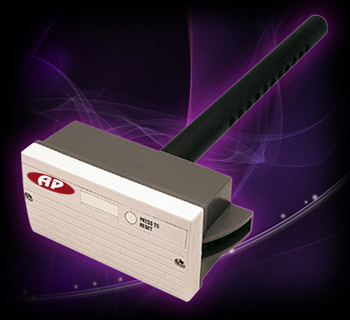 |
|
Using this replacement method, unnecessary false alarms can be avoided.
CAL has a built-in sensitivity control that
allows continuous internal diagnostics on its own status.
The sensitivity level can be adjusted.
The built-in opertion compensation, allows the
detector to automatically adjust its sensitivity as it becomes dirty.
P.S. CAL is designed to detect smoke in
ventilation ducts without additional fan.
More about
Replacement Detector |
|
|
2011-08-27
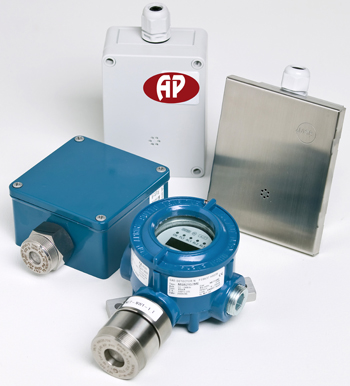
Detector for hydrogen sulphide protects people
and plants from toxic emissions.
The new gas detector
H2S from AP is designed to protect people, equipment and
plants from risks associated with hydrogen sulphide (H2S).
It is equipped with a Modbus communications protocol to facilitate bus
communication.
Hydrogen sulphide is a toxic gas whose odor is
usually described as that of "rotten eggs".
At high concentrations, however, there occurs a
paralysis of the sense of smell.
It is therefore not possible to use the sense of
smell to determine if an area is dangerous due to the presence of
hydrogen sulphide. |
 |
|
Modbus is a proven communications protocol for
the instrumentation that provides digital communication without
disturbing the integrity of the analog output signal 0-10Vdc or 4-20mA.
Modbus allows multiple variables, parameters,
device configuration and diagnostics to be transferred digitally
simultaneously with the analog signal.
The H2S gas detector is also available in
explosion-proof design and ATEX-compliant with CE certification.
The gas concentration is displayed on an LED
display.
The gas detectors come as standard with two
analog outputs, and as an option with two additional relay outputs.
H2S is equipped with an electro-chemical element,
which are highly selective and unaffected by ammonia, alcohols and other
gases that are commonly found in these environments.
The detector monitors H2S gas in parts per
million (ppm) and provides status indication. It is also equipped with
alarm outputs.
The sensor is available in 0-50ppm 0-100ppm or
0-200ppm to support a wide range of applications.
More about
hydrogen sulphide detectors |
|
|
2011-04-11
Are
you interested in low electrical installation costs for Controls for
Buildning and Industrial Automation?
New
installation philosophy reduces installation costs up to 65% in Controls
for Buildning and Industrial Automation
-
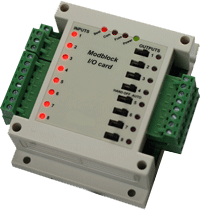
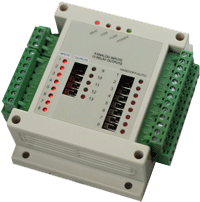
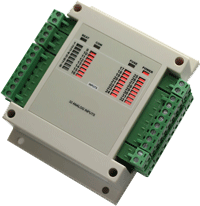
You can now connect Modbus-based Fieldbus-modules near the
control object, anywhere in the network.
-
Building Automation is now offered at a low cost for all types of
properties and applications.
Networking technology has expanded and is here to stay within Controls
for Buildning and Industrial Automation.
It has
contributed to the development of new technology opening up for a new
dimension.
This
means, among other things, that several players can participate and
compete in a market that earlier had limited exposure to competition,
giving end users greater flexibility.
The
system can also be used over Internet Modbus TCP, TCP/IP.
The open
platform allows the system to be used for most higher level control
systems.
Read more about
input/output modules, Modbus
|
 |
|
|
|
 |
|
|
|
 |
|
|
2011-03-29
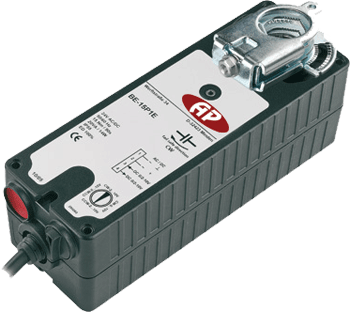
Waterproof damper actuators
For really tough environments there are damper actuators with protection
class IP66.
The weather-resistant actuator is extremely
robust and durable, even with fast running times.
Available as modulating, On / Off and increase /
decrease, failsafe, open / closed.
The carefully designed product is suitable for
ship installations, industrial sites, barn ventilation, outdoor
installation, etc.
You too should choose AP damper actuators when
extra high demands are required.
More:
|
 |
|
|
|
|
2011-03-12
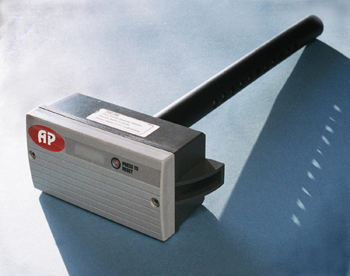
For the smoke control systems to function
satisfactorily, one must first of all have a smoke detector that is
manufactured for ventilation ducts.
It must be designed to withstand the environment in the ventilation duct
without interference.
There are two major interference problems which have caused a huge
number of false alarms on duct smoke detectors.
Pollution is a great problem in all ventilation ducts.
The detectors detect pollution as smoke, and often emit false alarms.
The second major problem is the air velocity in the duct.
High air velocities often interfere with detectors.
More:
|
 |
|
|
|
 |
|
|
|
|
2011-02-22
The FCO detects the fire before the smoke has emerged
The FCO is a high sensitivity detector which detects the first
stage of a fire - namely the gasification which preceeds the development
of smoke.
The FCO measures the concentration of CO in the ambient air and mixes
completely with the oxygen. This ensures a comprehensive detection of
the room or space.
The FCO works with relay outputs, analog signals and bus systems e.g.
Modbus and can thus be connected to all smoke control systems,
DDC-controllers and fire alarm systems.
-
The sensitivity can be selected from 5 - 45 ppm with an accuracy of
+ /- 3 ppm
-
2
relay outputs for alarm 10 ppm (for control measures), respectively
25 ppm (for real fire alarm)
-
Can be placed virtually anywhere, need not be placed in a turbulent
flow
-
Works even when stratification prevents the smoke from spreading
-
CO
penetrates dirt and dust etc.
-
Creates no false alarms
-
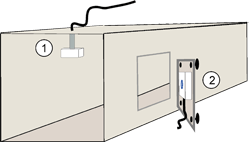
In
a ventilation duct the IP65 protected detector can be accessed via a
manhole
-
Detects up to a height of 12 meters
More |
Fire gas detector FCO with display, IP65 |
|
|
|
Installation inside ventilation duct |
|
|
2011-01-15
The OVK detector has a cleansing alarm for early
action against pollution from dust and other particles that circulate in
the ventilation systems of properties.
To prevent deterioration of the circulation and
efficiency alarm at various levels are given for monitoring measures or
for cleaning of ventilation ducts.
The OVK detector improves your indoor climate and
prevents the spread of fire by means of an automatic cleansing alarm.
More |
|
|
|
2010-12-17
The TDD duct smoke detector detects smoke at all
hours directly inside the duct
Countless examples show that a small fire damage
can have huge smoke and clean-up damages. This is mainly due to the new
plastic material now available on the market.
Detecting smoke automatically in a duct should
not be especially difficult if you had tried to make a detector
specially adapted for ventilation ducts and the problems that can occur
there.
What has been done before are adaptations of
ordinary standard room detectors for installation in ducts.
|
|
|
The TDD is a duct smoke detector designed
for ventilation that
-
works inside the ventilation duct
-
has adjustable sensitivity levels for various
environments that may exist in a duct
-
enables smoke detection to be measured
several times per second and dirt to be measured every two
hours
-
tells you during the whole operating time how
clean/dirty it is
-
compensates automatically for the current
pollution level with no change of sensitivity
-
provides a special service alarm when it
reaches maximum contamination
-
has marker that clearly indicates which
detector has given the alarm
The TDD is total economic LLC and this can
be summarized as follows:
-
Low operating costs for the owner, long time
between cleaning sessions, you know exactly how dirty the detector
is
-
No false alarms - no emergency expenses
-
No lost confidence in the alarm systems
The TDD is therefore a detector adapted to the
reality inside a ventilation duct
See also:
Smoke/Fire/OVK - Introduction
Smoke Control System |
|
|
2010-12-04
Environmental detector BIO ensures that the
required air flow from outside can be brought to the building while
optimizing ventilation.
Removes:
Takes into account:
-
Person Load (detects corresponding to a CO2
detector)
-
Emissions from substances
-
Emissions from land and water
|
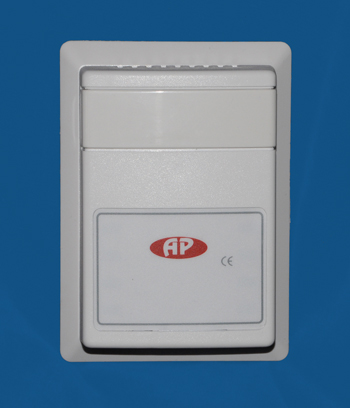 |
|
BIO has a built-in operating compensation and prediction algorithm which
recalibrates itself every second.
You too should try the BIO environment detector to save energy and to
remove unhealthy substances in the air.
Please visit the following pages for more information:
|
|
|
2010-11-13
New generation of selective refrigerant detectors
With a well-proven infrared sensor and the latest
digital technology Automatikprodukter Sweden, launches refrigerant Freon
detectors for HFC and HCFC, CO2 and ammonia gas.
The detector is a microprocessor-based device
with complex mathematical algorithms to provide remarkably accurate
measurements of low gas concentrations, ensuring maximum safety and
environmental protection.
|
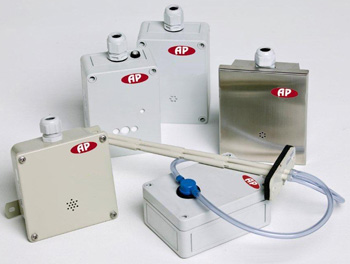 |
|
When the special properties of infrared
technology and the unique dual measuring chamber are combined the result
is reliable refrigerant detectors for early detection and avoidance of
false alarms.
The detector has a life expectancy of over 10
years and needs only supervision every 5 years.
A key concern in designing the detector was how
to reduce the number of recalibration and service calls caused by the
operation etc., in relation to conventional refrigerant detectors
without sacrificing sensitivity. Annual service inspections are no
longer needed with the new infrared technology.
Costs for operation and maintenance are hereby reduced.
See also:
Ammonia
Refrigerants -
Freon
CO2 - Cold/Freeze
|
|
|
2010-10-25
Carbon dioxide measurements (CO2)
down to -40°C
In low temperature ranges, measuring CO2
warns you of leakage with the CDC / CDF gas detector for:
-
Cold rooms - Freezer rooms
-
Outdoor installation - Tunnels
-
Parking garages - Cargo spaces
Equipped with internal temperature-controlled
heater
Robust and reliable - IP65
Click on the link below for more information
See also:
CO2
- Cold/Freeze store
|
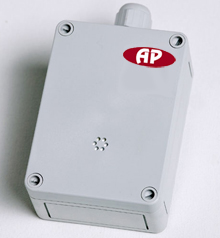 |
|
|
2010-10-15
New 0-25% Oxygen Sensor
Oxygen detectors are important in all environments where hypoxia may
occur.
This includes:
-
Liquid nitrogen storage ("cryorooms"), which
has pressurized nitrogen
-
Test vessels for vacuum
-
Licensed and enclosed spaces
-
Workplaces containing pressurized gases which
may displace oxygen
Oxygen Sensors are also used to detect leaks
inside sealed glove boxes used in scientific processes and in industrial
manufacture of light bulbs.
See also:
|
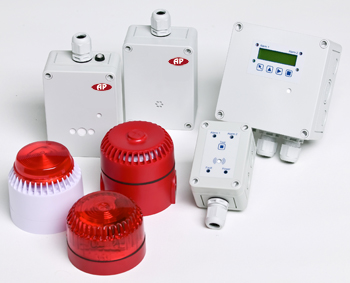 |
|
|
2010-06-06
Unexpectedly poor air quality in new houses -
create safe air
Tenants fall ill despite the increased use of natural materials.
Installation of air quality sensors would improve the ventilation and
exhaust ventilation of VOC (volatile organic compounds).
The substances that come from building materials
could make people sick. |
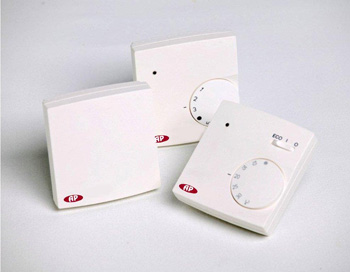 |
|
Just before people move into a building for the first time, the
concentrations of volatile organic compounds, VOCs, in indoor air is up
to eight times higher than what the industry benchmark states.
After about three years, the concentrations have
gone down but are still twice as high as the benchmark.
The volatile organic substances come from wood
and linoleum, materials which have become increasingly common in modern
homes.
The volatile organic substances also come from
floors and countertops that are regularly oiled.
Using a natural material is no guarantee that you
get low concentrations in indoor air.
Even less natural solvents from glues, paints and
cleaning agents are commonly found in indoor air.
It is not enough to check emissions from the
individual building materials.
You must also check the emissions in the new
buildings before people move in.
It is mainly terpenes that dominate the indoor
air.
These substances are found naturally in wooden
materials and linoleum carpets.
Research has shown that terpenes can react on
nitrogen oxides and ozone to form the so-called free radicals, which are
highly irritating to mucous membranes.
The substance is obtained from lemon peel and is
suspected to be allergenic.
It is often used as lemon scent in common
solvents.
Even n-butanol from water-based glues and paints,
as well as aldehydes occur in unexpectedly high concentrations in indoor
air.
See
air quality
and
air quality standard
PS: The QRM air quality detector costs 3000
SEK and is also used for demand controlled ventilation for cutting down
on kilowatt hours. |
|
|
|
2010-05-19
BUDGET MAKER MAJ 2010
CO2
Originalsensorn för koldioxid inbyggd i en
attraktiv rumskapsling, CDR 100V
Nu till 1000 kr/st oavsett antal
Tillverkaren erbjuder detta fabrikspris endast
fram till 30 juni 2010.
Läs
mer om CDR 100V
Ps. Detektorn har livstids kalibreringsgaranti,
se nedanstående pdf.
|
 |
|
BUDGET MAKER, May 2010
CO2
Original sensor for carbon dioxide built into an attractive room
enclosure, the CDR 100V.
Now at 1000 SEK/unit regardless of number.
The manufacturer offers this factory price only
until 30 June 2010.
Read more about the CDR
100V
Ps. The detector comes with lifetime calibration warranty, see pdf
below.
|
|
|
|
2010-05-18
Solar energy detector focuses on energy
conservation
There are many ways to become more energy efficient and save money.
It is likely that future energy taxes will
bebased on how much energy you consume / m2 or person.
With SEV energy detector you can measure the
global radiation and regulate your items by watts or by square meter.
Learn more about Automatikprodukter's
energy detector
You too should use SEV to measure / regulate
energy efficiently |
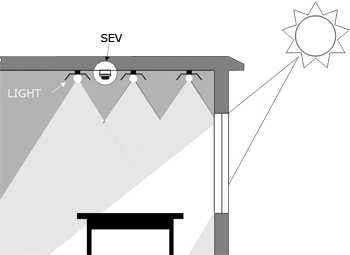 |
|
|
|